
TwistFree vs other jar openers: an honest comparison
Every jar opener promises to help. The difference is how much work your hands still have to do.
By the TwistFree UK team · Updated November 2026
Quick answer
Quick verdict: which jar opener should you choose?
- Choose a rubber grip if your hands are strong and lids just slip.
- Choose an under-cabinet opener if you don't mind fitting one and can still twist the jar with both hands.
- Choose TwistFree if twisting hurts, your grip is weak, or you want a lid opened with one button press.
Every option side by side
| Option | Hand effort | Wrist strain | Storage | Set-up | Typical cost |
|---|---|---|---|---|---|
| Rubber grip | High | High | Drawer | None | Very low |
| Jar wrench | Medium–high | Medium | Drawer | None | Low |
| Under-cabinet | Medium | Medium | Fixed | Screw fitting | Low |
| Seal-release tool | Medium | Medium | Drawer | None | Low |
| Hot water | High | High | None | Kettle/tap | Free |
| Other electric openers | Low | Low | Varies | Varies | Varies |
| TwistFree | Very low (one button) | Very low | Drawer | 2 AA batteries (included) | From €45 (about £39) |
TwistFree vs alternatives: what should you compare first?
Start with the part of opening a jar that causes difficulty. Does your hand slip on a smooth lid, or can you hold it but struggle to turn it? A grip aid changes the contact between your hand and the lid; a powered opener changes who supplies the turning force.
Think about the whole task: getting the jar onto a stable surface, positioning the opener and lifting off the loosened lid. If you are buying for someone else, ask which step they find awkward.
How does TwistFree compare with manual jar openers?
This is a practical comparison of methods, not a laboratory ranking of particular brands.
| Option | What it changes | What to consider |
|---|---|---|
| Rubber grip pad | Adds grip between hand and lid | You still grip and twist |
| Jar wrench | Provides a handle for leverage | Still requires manual turning and jar control |
| Under-cabinet opener | Provides a fixed point to hold the lid | Needs suitable fitting and access beneath it |
| Warm-water method | Attempts to loosen a stubborn lid | Does not remove the need to turn it |
| TwistFree | Grips and turns electrically | Fits 3–9 cm lids; needs AA batteries |
Prefer powered turning? Check TwistFree bundle prices.
UK delivery · 90-day money-back guarantee · Secure checkout
Is a rubber jar gripper enough for a slippery lid?
A rubber pad is worth considering when the main problem is slipping rather than turning strength. Your fingers, hand and wrist still have to produce the movement that opens the jar. If squeezing or twisting is the difficult part, extra friction may not address your main concern.
TwistFree vs jar wrenches: who does the turning?
A jar wrench gives you a handle rather than asking you to grasp the lid directly. You still need to operate the handle and manage the jar.
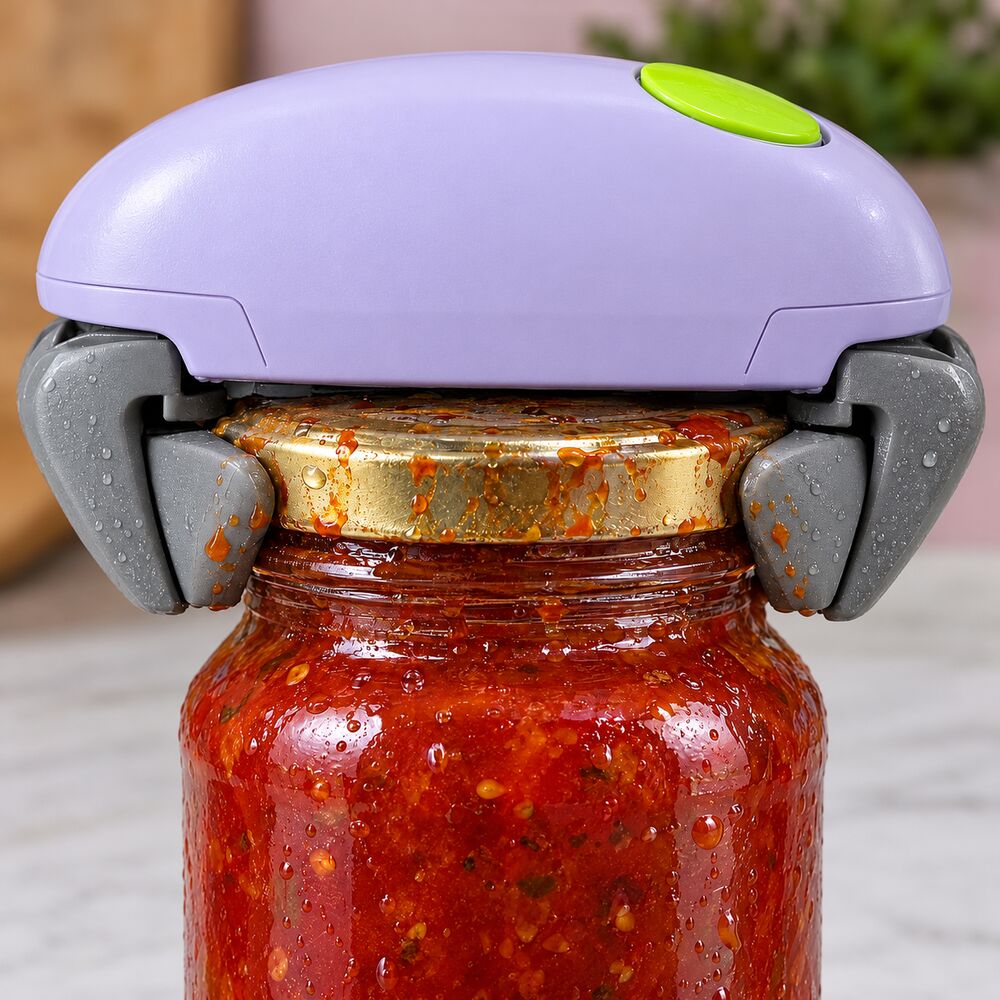
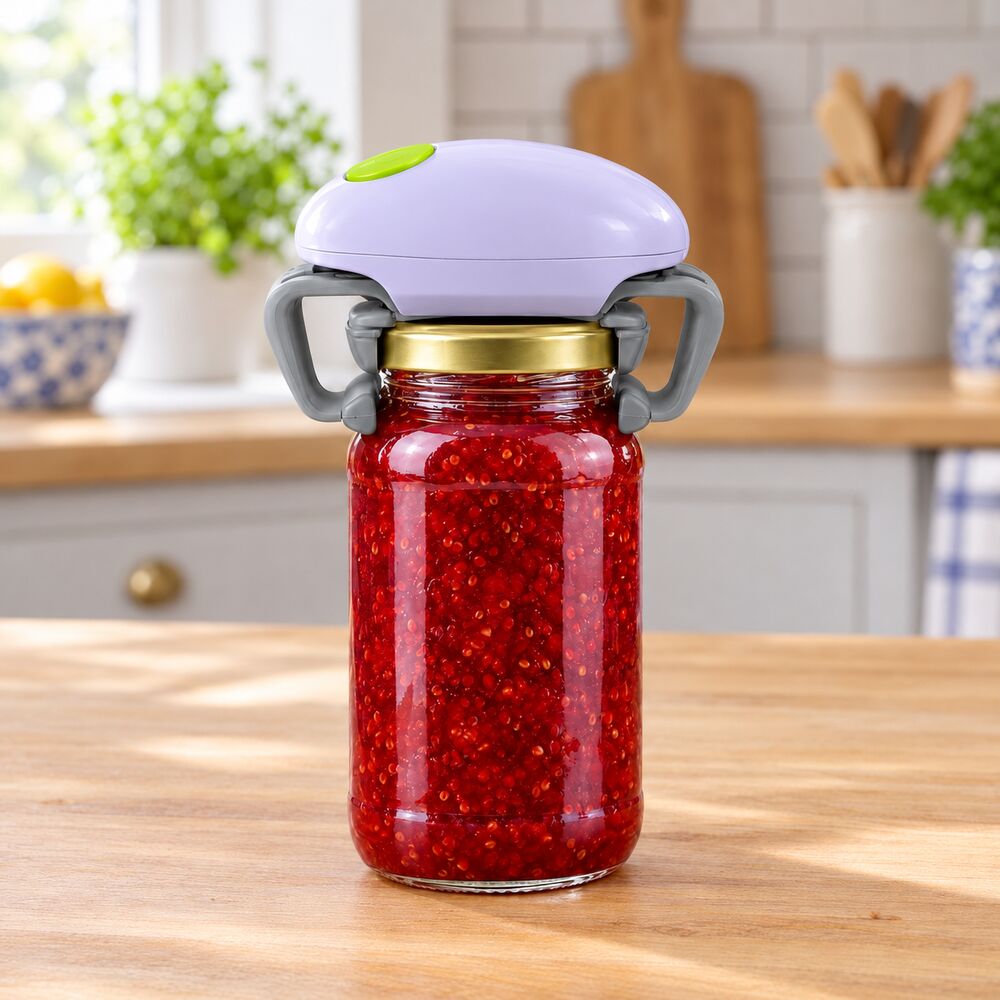
TwistFree's twin grip arms grip the lid, then the motor supplies the turning action. It opens most lids in about eight seconds and auto-stops.
Is an under-cabinet jar opener better than a portable one?
An under-cabinet design creates a fixed opening position. Check its fitting requirements, the available space and whether the user can comfortably bring a jar to that position.
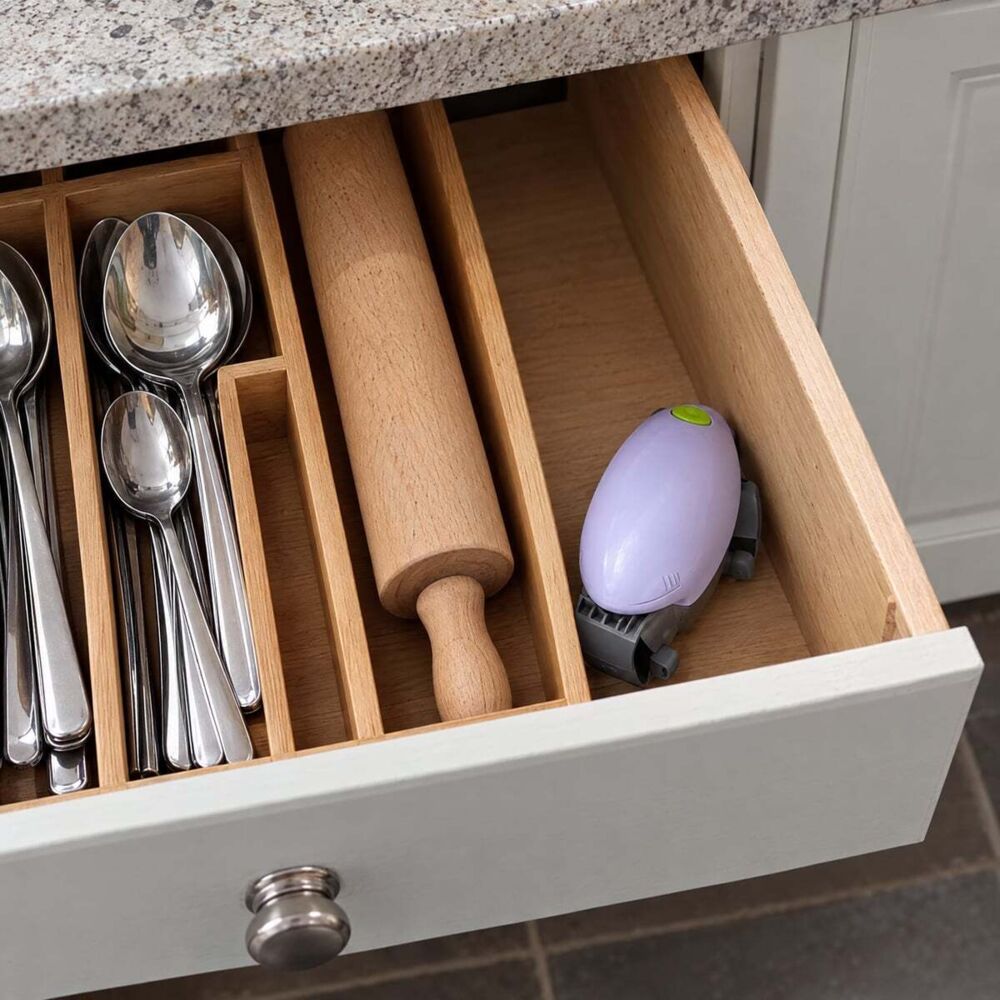
TwistFree does not need cupboard fitting. It weighs approximately 340 g, runs on two AA batteries and fits in a drawer. The user must still be able to take it out and position it.
Should I try hot water before buying an electric jar opener?
Warm water attempts to loosen a stubborn lid; you still need to grip and turn it. Avoid scalding water, sudden temperature changes and striking glass. Read our guide to opening a stuck jar.
Which jar lids fit TwistFree, and what are its limits?
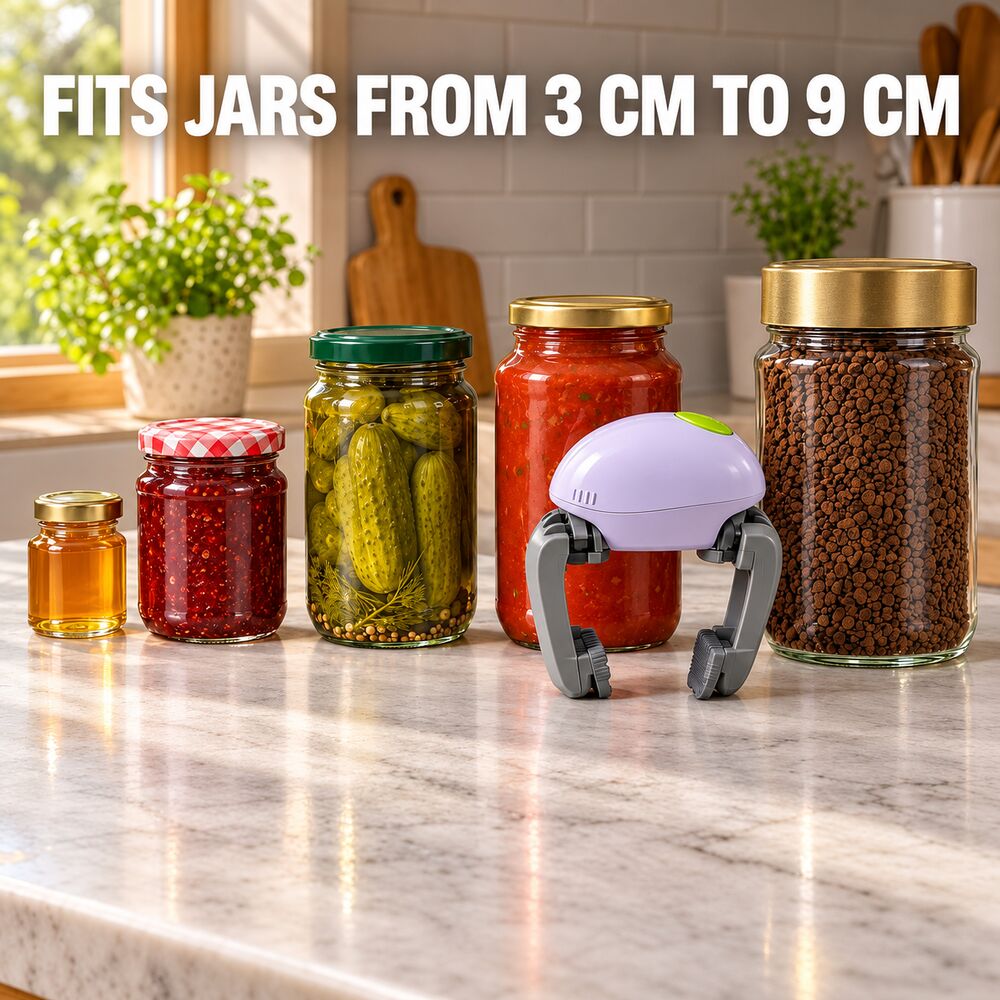
Measure across the lid. TwistFree fits lids from 3–9 cm.
- Lids under 3 cm or over 9 cm are outside its stated range.
- It is not a bottle-cap opener or a ring-pull can opener.
- Very tall or unusually shaped jars may need holding steady.
- The included two AA batteries will eventually need replacing.
TwistFree vs other electric jar openers: what to check
| Check | Why it matters | TwistFree |
|---|---|---|
| Lid range | Must fit the jars you buy | 3–9 cm |
| Power source | No trailing cable or charging | 2 AA batteries, included |
| Auto-stop | Stops once the lid is loose | Yes |
| Weight | Easy to lift and store | About 340 g |
| Guarantee | Lets you try it at home | 90-day money-back |
| Seller | Know who you buy from | Sold only on twistfree.co.uk |
Who should NOT buy TwistFree?
- Anyone whose jars have lids under 3 cm or over 9 cm.
- People looking for a bottle-cap or tin opener.
- People who open jars easily with a rubber grip and don't need more help.
Is TwistFree a sensible alternative for weak grip?
For someone with arthritis, carpal tunnel or reduced grip, the useful question is whether powered turning makes their particular kitchen task easier. TwistFree is a kitchen aid, not a treatment. Our guide to choosing a jar opener for arthritis looks at practical considerations.
Which TwistFree bundle should I compare with alternatives?
The launch prices are €45 (about £39) for one, €69 (about £59) for two, €89 (about £79) for three and €139 (about £119) for four. The three-pack has the lowest price per opener at about £26.33. Check the official TwistFree bundle options before choosing.
What should I check before choosing TwistFree over a manual opener?
Make a short list: the lid sizes you use, which movements are difficult, where the opener will live and whether replacing batteries is acceptable. TwistFree includes a 90-day money-back guarantee; read the returns and money-back guarantee information before ordering.
Frequently asked questions
Skip the struggle with TwistFree
- Opens lids in about 8 seconds
- No grip or twisting needed
- Fits lids 3–9 cm
- 90-day money-back guarantee