
Jar opener for arthritis: no gripping, no twisting
If gripping a lid and turning it by hand is difficult, an electric opener offers a different way to tackle compatible jars.
By the TwistFree UK team · Updated November 2026
Quick answer
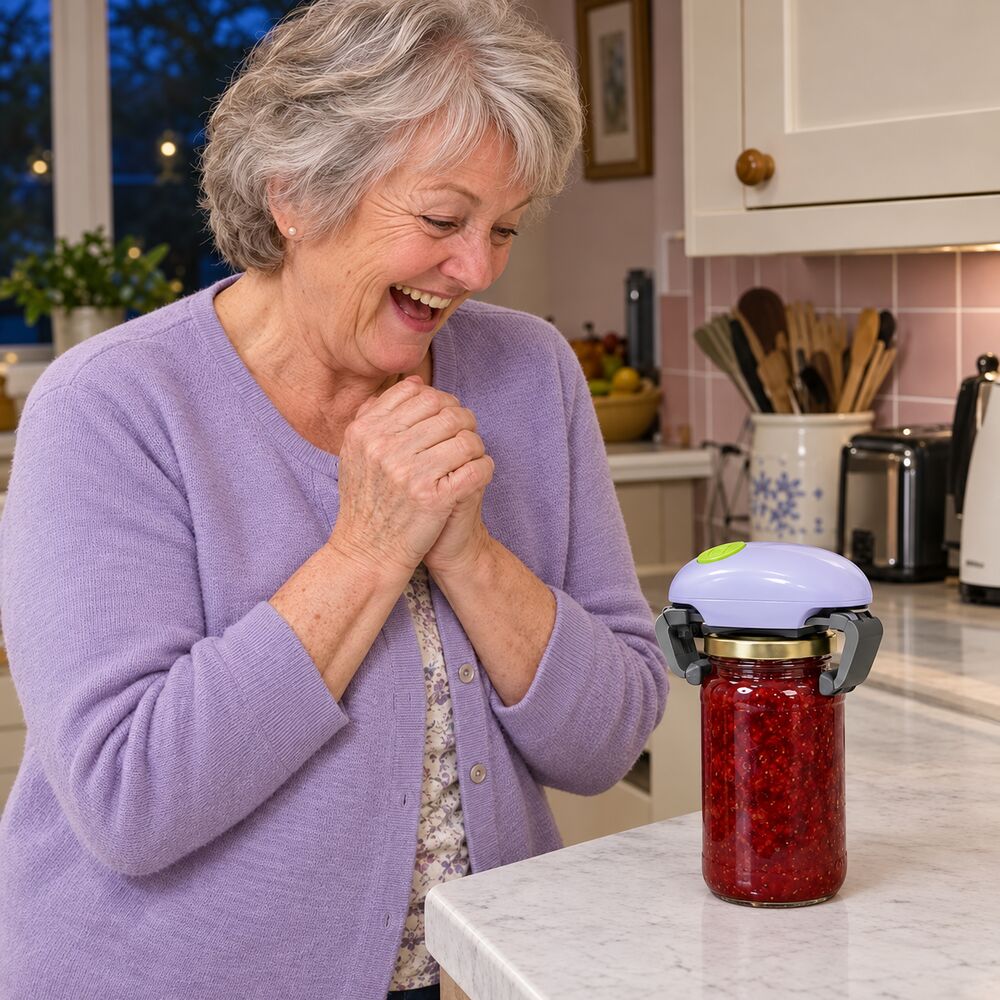
Choose your bundle
Prices are charged in euros (€). £ amounts are a rounded guide; your bank converts at its own rate.
Dispatched from the UK · Usually arrives in 3–5 working days
- UK delivery in 3–5 working days
- 90-day money back
- Secure checkout
- UK email support


Jar openers for arthritic hands compared
| Opener | Grip needed | Wrist twist | Pinch | Hands needed |
|---|---|---|---|---|
| Rubber grip | High | Yes | Yes | Two |
| Jar wrench | Medium | Yes | Some | Two |
| Under-cabinet | Medium | Yes | No | One to two |
| Electric (TwistFree) | Very low | No | No | Usually one |
What should you look for in a jar opener for arthritis?
Start with the part of opening a jar that is difficult for you. Holding a smooth lid, keeping the jar still and turning your wrist are different tasks. A tool that improves friction may help with the first task while leaving the turning effort unchanged.
An electric jar opener takes a different approach: a motor does the turning. However, you still need to place the device, operate its button and remove it afterwards. The right choice depends on those practical movements as well as the force needed to loosen a lid.
Consider your actual kitchen routine rather than a condition label alone. Two people with arthritis or weak hands may find the same object very different to handle.
Check TwistFree prices and choose a bundle for your kitchen.
UK delivery · 90-day money-back guarantee · Secure checkout
How does an electric jar opener help with weak hands?
TwistFree uses twin grip arms to grip the lid while its motor turns it. Pressing one button starts the opening process, and the device auto-stops. Most compatible lids open in about eight seconds.
The distinction is between powering the twist yourself and letting a motor do that work. It does not mean every part of the task is hands-free. Very tall or oddly shaped jars may need holding steady, and placing the opener still requires handling an object weighing approximately 340 g.
- One button starts the opening process.
- Twin grip arms handle the lid-gripping stage.
- The motor provides the turning action.
- An automatic stop completes the powered cycle.
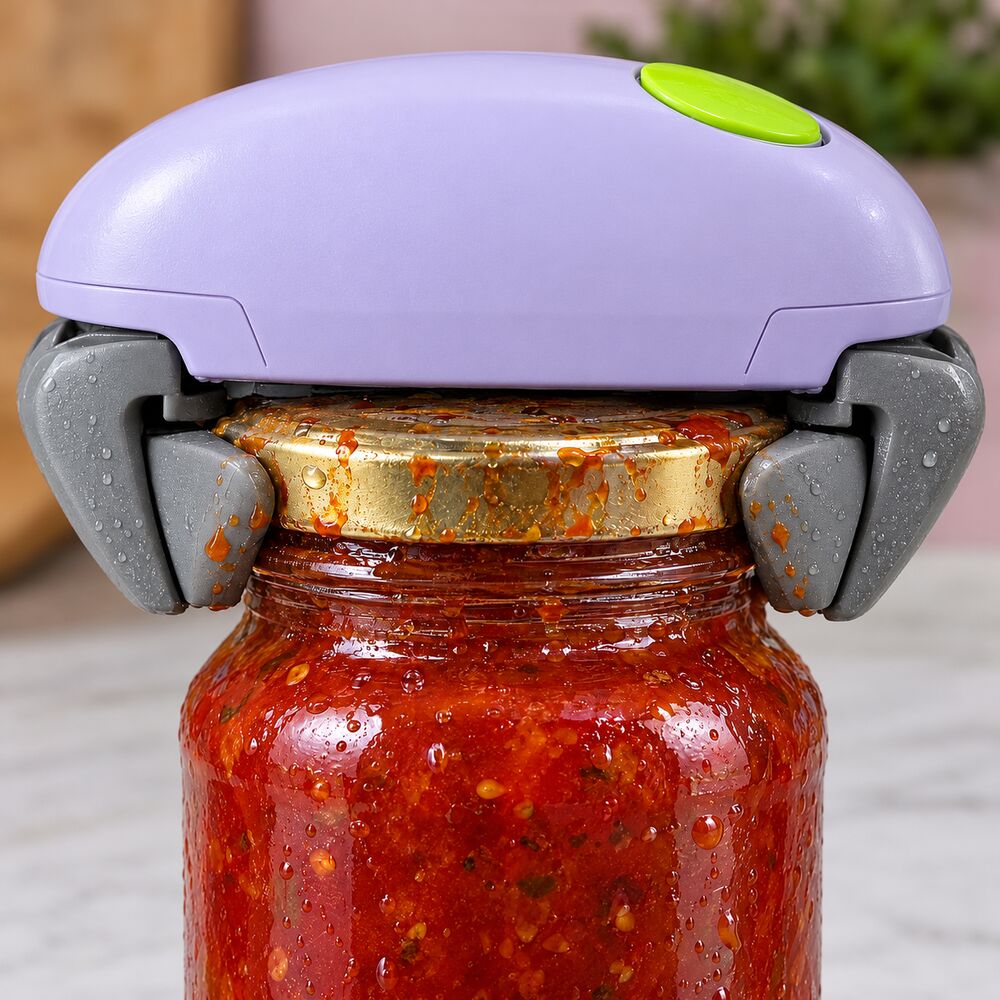
Which jars fit a jar opener for arthritic hands?
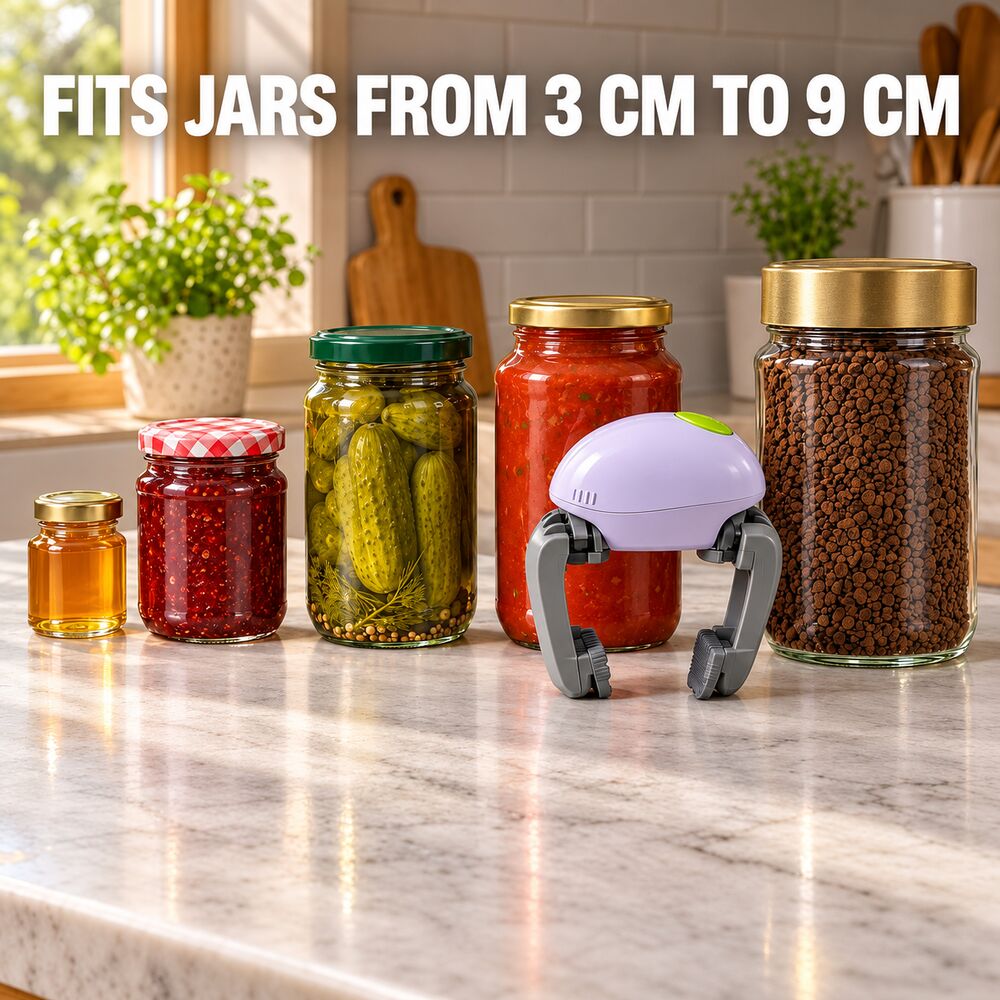
TwistFree fits lids measuring 3–9 cm across. Before buying, take a few jars that you regularly use and measure across the centre of each lid. Check the smallest and largest, rather than relying on a single familiar jar.
| Item | What to check |
|---|---|
| Jar lid | Must measure 3–9 cm across. |
| Very tall jar | May need holding steady. |
| Oddly shaped jar | May also need support during opening. |
| Bottle cap | Not suitable. |
| Ring-pull can | Not suitable. |
Is an electric opener better than a manual jar opener?
Think about what each approach asks your hands to do. A grip mat or manual opener still relies on you supplying the turning force. TwistFree uses a motor for that part, but brings its own requirements: positioning the unit, checking compatibility and replacing batteries eventually.
Neither approach is automatically right for everyone. Our comparison of TwistFree and other jar-opening approaches can help you think through those differences.
How do you use TwistFree when your grip is limited?
Choose a clear working area where you can reach the jar comfortably, check its lid size and consider whether its shape will require support.
- Check that the lid is within the 3–9 cm range.
- Place the opener on the jar, following its supplied instructions.
- Press the button to start the powered opening cycle.
- Allow it to auto-stop before removing the device.
- Take care when handling the opened jar and its contents.
For a closer look at the mechanism, read how the one-button jar opener works.
What are the practical advantages and limits for arthritis?
The main advantage is straightforward: you do not supply the lid-turning force. The single-button operation also avoids a sequence of different controls.
The limits deserve equal attention. It will not open every type of closure, unusually shaped jars may need steadying, and the two included AA batteries will eventually need replacing. If lifting or positioning equipment is difficult, a powered twist alone may not solve the whole task.
TwistFree is a kitchen gadget, not a medical device. It does not treat arthritis or carpal tunnel. Ask your GP or occupational therapist about individual concerns.
Will a battery-powered jar opener fit your routine?
TwistFree uses two AA batteries, included in the box, and fits in a drawer. Storage is only useful if retrieving the opener is manageable.
If replacing batteries is difficult for you, decide who could help before the first set runs down.
How much does a jar opener for arthritis cost in the UK?
One TwistFree costs €45 (about £39), previously €90 (about £78). The two-pack is €69 (about £59), previously €179 (about £156); three cost €89 (about £79), previously €269 (about £234); and four cost €139 (about £119), previously €359 (about £314). Prices are charged in euros, with a rounded £ guide through the official UK store, twistfree.co.uk.
Choose quantity around genuine need. See the current TwistFree bundle options before ordering.
What should you check before ordering for yourself or a parent?
Write down three things: the lid sizes used most often, whether the intended user can position a 340 g device, and whether their usual jars need steadying.
Orders are dispatched from the UK and delivery takes 3–5 working days. Checkout is through secure Shopify checkout, and a 90-day money-back guarantee is included. Read the returns process and guarantee information before buying. For product questions, contact support@twistfree.co.uk.
Which conditions make jars hard to open?
People search for a jar opener for many reasons. This is practical information about the difficulty, not medical advice:
- Osteoarthritis and rheumatoid arthritis: stiff or painful finger, thumb and wrist joints make squeezing and twisting hard.
- Carpal tunnel: numbness or weakness can make a firm grip difficult to hold.
- Thumb joint pain: the pinch-and-turn movement on a lid is often the sore part.
- One-handed use: after a stroke or injury, holding the jar and turning the lid at once may not be possible.
An occupational therapist can suggest kitchen aids for your own situation.
Easier kitchen tips for sore hands
- Keep a damp cloth or non-slip mat on the worktop to stop jars sliding.
- Choose lighter pans and use both hands to lift them.
- Use thick-handled cutlery and utensils, which need less grip.
- Store everyday jars at waist height so you don't reach or stretch.
- Plan heavier kitchen jobs for the time of day your hands feel best.
More guides
Frequently asked questions
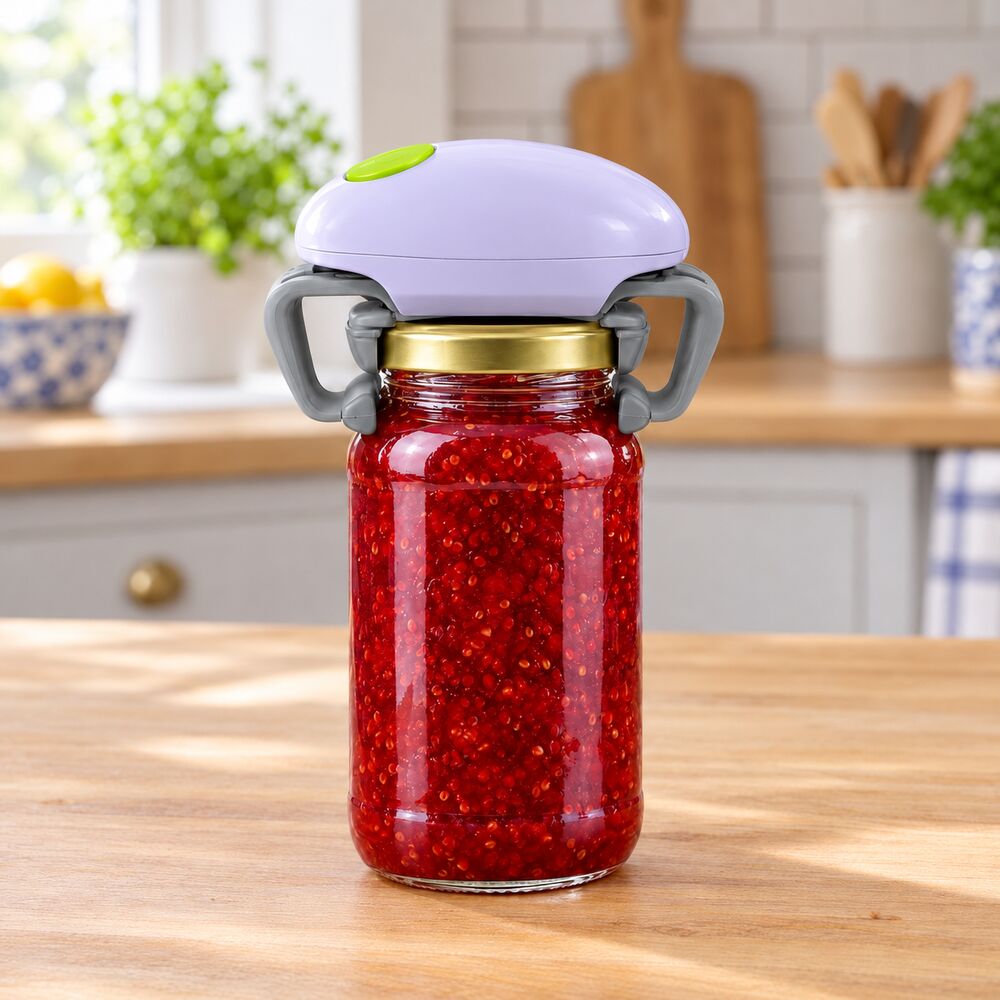
Skip the struggle with TwistFree
- Opens lids in about 8 seconds
- No grip or twisting needed
- Fits lids 3–9 cm
- 90-day money-back guarantee